
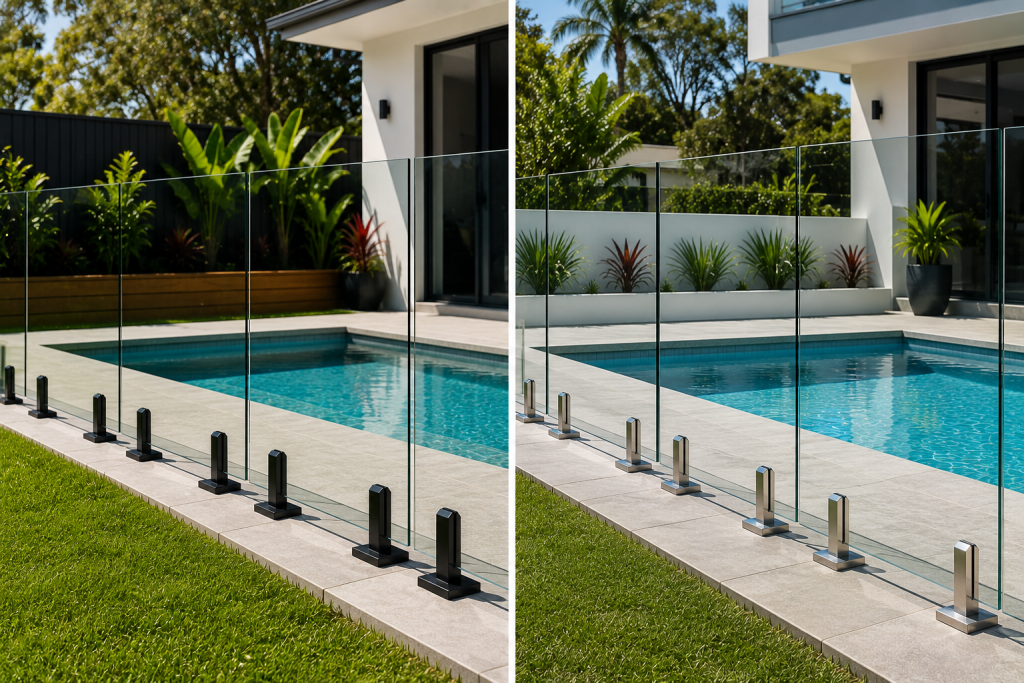
Choosing the right hardware is an important part of planning frameless glass pool fencing. While the glass provides the clean, open appearance, the spigots affect the overall style and can influence maintenance requirements depending on the material, finish and environment.
If you are comparing black spigots vs steel spigots, the main decision is not simply about colour. You should also consider the stainless-steel grade, black coating, exposure to salt and moisture, expected maintenance and how the hardware will work with the rest of your outdoor finishes.
For coastal or high-salt environments, 316 stainless steel is commonly specified because of its increased resistance to chloride exposure. Black spigots can also be suitable when the underlying material and coating are appropriate for the environment.
Black Spigots vs Steel Spigots: At a Glance
| Factor | Black spigots | Stainless steel spigots |
|---|---|---|
| Appearance | Bold, modern and architectural | Clean, neutral and timeless |
| Design | Works well with black window frames, gates and other dark finishes | Works with most architectural styles and allows the glass to remain the focus |
| Coastal exposure | Check the base material and coating specification carefully | 316 stainless steel is commonly selected for coastal applications |
| Surface damage | Scratches or chips can be more visible | Brushed finishes can disguise minor marks |
| Maintenance | Regular cleaning and inspection of the coating | Regular cleaning and rinsing, particularly in coastal areas |
| Best suited to | Modern homes and coordinated black exterior finishes | Coastal homes, classic designs and homeowners wanting a neutral finish |
What Are Glass Pool Fence Spigots?
Spigots are the metal fittings used to support frameless glass panels at the base of the fence. Unlike framed fencing systems, frameless glass fencing uses the glass and its supporting hardware to create a more open appearance with fewer visible structural elements.
The spigot itself is therefore a relatively small component, but its material, finish and installation still matter. The correct hardware must be suitable for the glass system, fixing method, substrate and design of the barrier.
When choosing glass pool fencing spigots, look beyond the colour. Check the product specification, material grade, finish, manufacturer’s installation requirements and suitability for the environment.
Black Spigots for Glass Pool Fencing
Black spigots are popular where homeowners want the pool fence hardware to form part of a wider black or dark exterior colour scheme.
Why choose black spigots?
- They create stronger visual contrast against clear glass.
- They complement black window frames and aluminium finishes.
- They suit contemporary and minimalist architecture.
- They can coordinate with black pool gates, lighting and outdoor fixtures.
- They give the hardware a more defined architectural appearance.
What should you check before choosing black spigots?
Not all black spigots are made the same way. The performance of a black finish depends on the underlying metal, the coating or surface treatment and the environment where the hardware is installed.
Before ordering, ask the supplier:
- What material is underneath the black finish?
- What stainless-steel grade is used, if applicable?
- Is the coating intended for exterior use?
- Is the finish suitable for the property’s level of coastal exposure?
- What cleaning and maintenance instructions does the manufacturer provide?
- What does the product warranty cover?
This is particularly important for properties close to the ocean, where salt and moisture can increase corrosion risk.
Stainless Steel Spigots for Glass Pool Fencing
Stainless steel remains a popular choice for frameless glass pool fencing because it provides a neutral appearance and is available in grades suited to different environments.
Why choose stainless steel spigots?
- They provide a clean and timeless appearance.
- They work with contemporary, traditional and coastal architecture.
- Brushed finishes can make minor marks less noticeable.
- Suitable stainless-steel grades provide good corrosion resistance.
- They can coordinate easily with other stainless hardware around the pool.
304 vs 316 Stainless Steel Spigots
If you are comparing stainless steel spigots, the grade is more important than simply calling the product “stainless steel”.
316 stainless steel contains molybdenum, which improves resistance to chloride exposure. This is one reason 316 is commonly specified for coastal applications and other environments where salt exposure is a concern.
That does not mean every installation requires 316. Environmental exposure, product specification and the manufacturer’s recommendations should be considered before selecting the grade.
For a property close to the coast, ask your supplier to confirm the stainless-steel grade in the product specification rather than relying on a general description such as “marine grade”.
Which Is Better for Coastal Homes?
For coastal properties, the important question is not simply black or stainless steel. The underlying material and finish matter.
316 stainless steel is commonly selected for coastal applications because it provides increased resistance to chloride exposure. If you want black hardware, ask for a black-finished product whose base material and coating are specified for the environment.
Exposure can vary significantly between properties. A home directly exposed to sea air can experience different conditions from a property further inland, even within the same region.
If you are unsure, confirm the product specification with your supplier before ordering.
Black vs Stainless Steel Spigots: Maintenance
Neither finish should be treated as maintenance-free. Pool fencing hardware is exposed to weather, moisture, pool chemicals, dust and, in coastal areas, salt.
Maintaining black spigots
- Rinse away salt and dirt regularly.
- Use the cleaning products recommended by the manufacturer.
- Avoid abrasive products that could damage the coating.
- Inspect the finish for scratches, chips or other damage.
- Deal with coating damage according to the manufacturer’s repair instructions.
Maintaining stainless steel spigots
- Rinse regularly with fresh water, particularly in coastal locations.
- Clean with a suitable mild detergent when required.
- Avoid harsh or unsuitable chemicals.
- Do not use carbon-steel tools or materials that can contaminate the stainless surface.
- Follow the manufacturer’s cleaning instructions.
Regular cleaning is especially important near the coast because salt deposits left on the surface can contribute to staining and corrosion-related appearance issues.
Which Finish Shows Dirt and Marks More?
The answer depends partly on the surface finish and the environment.
Black finishes can make dust, salt residue, water spots and some scratches more noticeable because of the contrast against the dark surface.
Brushed stainless steel can disguise some minor marks and water spotting better than a highly polished surface. However, stainless steel can still develop staining if contaminants are allowed to remain on the surface.
If the fence is exposed to salt spray, regular rinsing is more important than choosing a particular colour.
Which Spigot Finish Looks Best?
This comes down largely to the architecture and finishes already used around the property.
Black spigots suit:
- Modern homes
- Black window frames
- Dark aluminium fencing
- Black pool gates and hardware
- Contemporary landscaping
- Monochrome exterior colour schemes
Stainless steel suits:
- Coastal homes
- Classic and contemporary architecture
- Properties with existing stainless hardware
- Designs where the glass should remain visually dominant
- Projects requiring a neutral hardware finish
If you are matching an existing black exterior finish, compare a physical sample in daylight before ordering. Different black coatings can vary in tone, sheen and texture.
How Much Do Black and Stainless Steel Spigots Cost?
There is no reliable universal price difference between black and stainless steel spigots. Pricing can vary according to the manufacturer, stainless-steel grade, coating specification, design, quantity and current supplier pricing.
For that reason, compare the actual product specifications and current quotation rather than assuming one finish will always cost more.
It is also worth considering the installation environment. A lower-cost product that is poorly suited to the location can create additional maintenance or replacement costs later.
How to Choose the Right Spigots
Before ordering your glass pool fencing spigots, work through these questions:
- Where is the property? Consider coastal exposure, salt, moisture and the surrounding environment.
- What material and grade is the product? Don’t choose based on colour alone.
- What finish does the client want? Compare the spigot with existing windows, gates, balustrades and outdoor hardware.
- What does the manufacturer specify? Check installation, cleaning, maintenance and environmental requirements.
- Is the hardware compatible? Confirm the spigot suits the glass thickness, fixing method, substrate and engineered design.
- What maintenance will the client need to perform? Make the care requirements clear before handover.
Does the Spigot Finish Affect Pool Fence Compliance?
The colour of a spigot does not by itself determine whether a pool barrier complies with the applicable requirements. Compliance depends on the complete barrier system, its design, construction, installation and the rules that apply to the property.
For example, NSW Government states that pool barriers must comply with the relevant Australian Standards and that the applicable requirements can depend on when the pool was constructed and whether the barrier has subsequently been modified.
For this reason, don’t use this article as a substitute for the applicable legislation, Australian Standards, engineering documentation or professional compliance advice.
Before installation, confirm:
- The spigot and glass system are suitable for the intended application.
- The fixing method is appropriate for the substrate.
- The installed barrier follows the relevant design and safety requirements.
- The manufacturer’s installation instructions are followed.
- Any required certification or inspection is completed by the appropriate person.
Black Spigots vs Steel Spigots: Which Should You Choose?
There is no single finish that is right for every property.
Black spigots can be a good fit when the homeowner wants the pool fence hardware to coordinate with black windows, gates, lighting or other exterior finishes. The quality of the underlying material and coating should still be checked, particularly in exposed locations.
Stainless steel spigots provide a neutral, timeless appearance and are available in grades suited to different environments. For coastal applications, 316 stainless steel is commonly selected because of its increased resistance to chloride exposure.
The practical decision is therefore to compare material, grade, coating, environmental exposure, maintenance and design rather than choosing solely on colour.
If you’re unsure which spigot specification suits your project, speak with your supplier before ordering and confirm the manufacturer’s recommendations for the installation environment.
Need Help Choosing Glass Pool Fence Hardware?
If you’re comparing black and stainless steel spigots for a glass pool fencing project, our team can help you check the available hardware options and specifications.
Request a quote or call (02) 9627 9500.
Frequently Asked Questions
1. Are black spigots as durable as stainless steel?
They can be, but durability depends on the complete product specification. The underlying material, coating quality, installation and environmental exposure all matter. A black finish should not be judged by colour alone.
2. Are black spigots suitable for coastal homes?
They can be suitable when the underlying material and coating are specified for the environment. Ask the supplier to confirm the product’s material and finish requirements for coastal exposure.
3. Is 316 stainless steel better for coastal pool fencing?
316 stainless steel is commonly selected for coastal applications because its molybdenum content provides increased resistance to chloride exposure. The appropriate product should still be selected according to the manufacturer’s specification and the installation environment.
4. Do black spigots fade?
The performance of a black finish depends on the coating system, exposure and maintenance. Quality exterior finishes are designed for outdoor use, but all coated hardware should be maintained according to the manufacturer’s instructions.
5. Which spigot finish is easier to maintain?
Both require routine cleaning. Black finishes can make dust, salt and some scratches more visible, while brushed stainless steel can disguise some minor marks. Coastal locations require particular attention to regular rinsing regardless of finish.
6. Can I replace stainless steel spigots with black spigots?
Possibly, but compatibility must be checked before replacement. The new spigots need to suit the existing glass, fixing arrangement, substrate and manufacturer’s requirements.
7. How do I choose spigots for frameless glass pool fencing?
Start with the environment and product specification. Check the stainless-steel grade or base material, coating, coastal suitability, glass compatibility, fixing method, maintenance requirements and applicable pool-barrier requirements. Then choose the finish that suits the property’s design.