
Written by Trent, Glass & Fencing Warehouse, Riverstone.
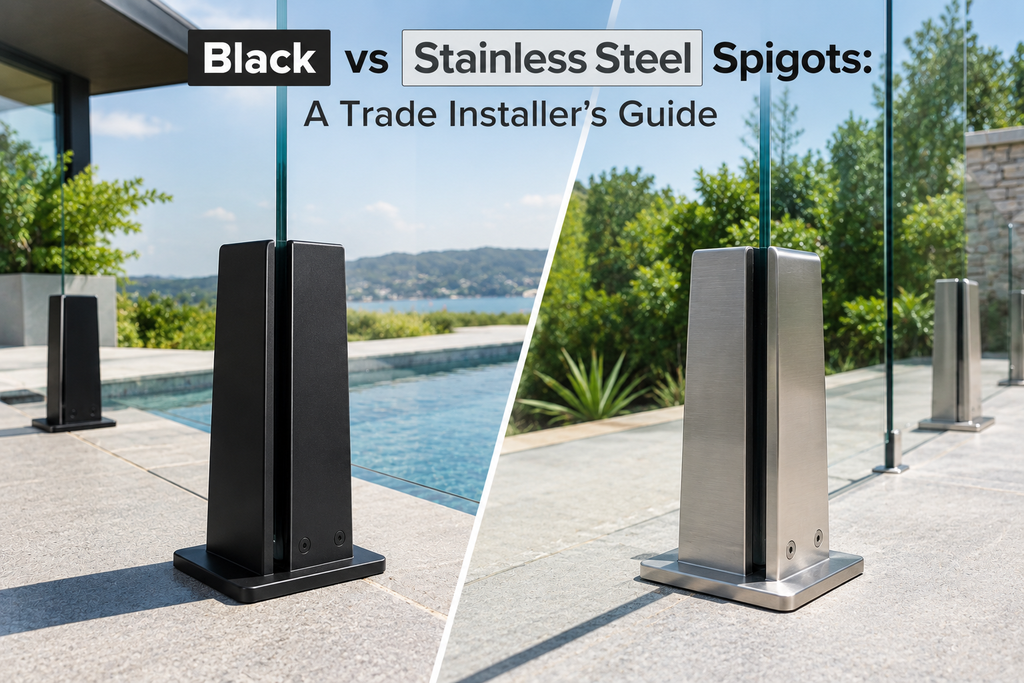
Every so often a quote request lands with a line like “frameless glass, black hardware if possible.” Nothing unusual about that. Black is popular right now, and most installers can price it without thinking twice.
The trouble starts when you look at the address. If it’s a few hundred metres from the water, or the paving hasn’t gone in yet, or the client has quietly chosen a slightly different black for the window frames, that simple line turns into a decision worth ten minutes of thought. This is a guide to those ten minutes, and to the follow-up questions that tend to come after them.
If you’re a homeowner trying to pick a look, our homeowner comparison of black and stainless spigots will suit you better. What follows is for the people doing the installing.
Start with the salt, not the style
When people compare black vs stainless steel spigots, they usually start with looks. We’d start with the air. Ask how close the fence is to salt water, and be honest about it, because “near the beach” covers everything from a house on the sand to a street two suburbs back. Wind direction, dunes, headlands and how sheltered the yard is all change how much salt ends up on the hardware. There’s even a Standard for it, AS 4312, which sorts atmospheric corrosivity into categories. You don’t need to memorise it. You just need to know that “coastal” isn’t one thing.
Our rule of thumb is simple. If there’s real salt exposure, quote 316 stainless. If you’re not sure, quote 316 stainless and ring your supplier for a second opinion. It’s cheaper than going back to a finished pool fence to explain why the base plates have gone brown.
Pool water adds its own layer. Chlorine and other pool chemicals are hard on metal, and spigots sit low, right where splash, spray and puddles collect. So even an inland pool isn’t an entirely gentle environment, which is one more reason a lot of installers default to 316 for pool work and save the “either will do” conversation for balustrades and dry areas.
Why 316, and why not just 304?
The short answer is molybdenum. 316 has it, and it helps the steel cope with chlorides, which is the salt in sea air and the chlorine around a pool. 304 is perfectly reasonable in plenty of inland spots. Near the coast it’s more likely to develop surface staining, the brown “tea” marks clients notice and blame you for.
316 isn’t magic. It still needs rinsing, and it can still mark if the surface is contaminated. It simply gives you more margin when conditions are rough. Whatever you order, get the grade confirmed in writing rather than trusting a product name, because “stainless” on a listing can mean more than one thing.
The finish on the stainless matters too. A brushed or satin surface tends to hide fingerprints, water marks and light scratches better than a mirror polish, which shows everything. If a client wants stainless and is fussy about how it looks, a satin finish is usually the easier one to live with.
Black is a finish, so ask what’s underneath
Black spigots are usually a base metal with a black coating on top, often a powder coat. That coating is what people see, and it’s the first thing to fail if it’s treated badly. So there are really two questions. How good is the coating, and what’s under it?
If the base is corrosion-resistant stainless, a chip is mostly a cosmetic problem you can touch up. If it isn’t, a chip can become an entry point for corrosion, and that’s a much bigger problem than colour. Ask the supplier what the base metal is, whether the coating is rated for exterior and coastal use, and what the warranty actually covers. It’s a two-minute phone call and it tells you a lot.
It’s also worth being honest with clients about what black is like to live with. Dark surfaces show dust, water spots and salt residue more than most people expect, so a black fence tends to look best when someone gives it a rinse now and then. That’s not a flaw. It’s just a trade-off, and clients are happier when they hear about it before install day.
Most damage happens after the glass is up
This is what installers keep telling us, and it’s worth taking seriously. Manufacturing faults are rare next to what happens on a busy site.
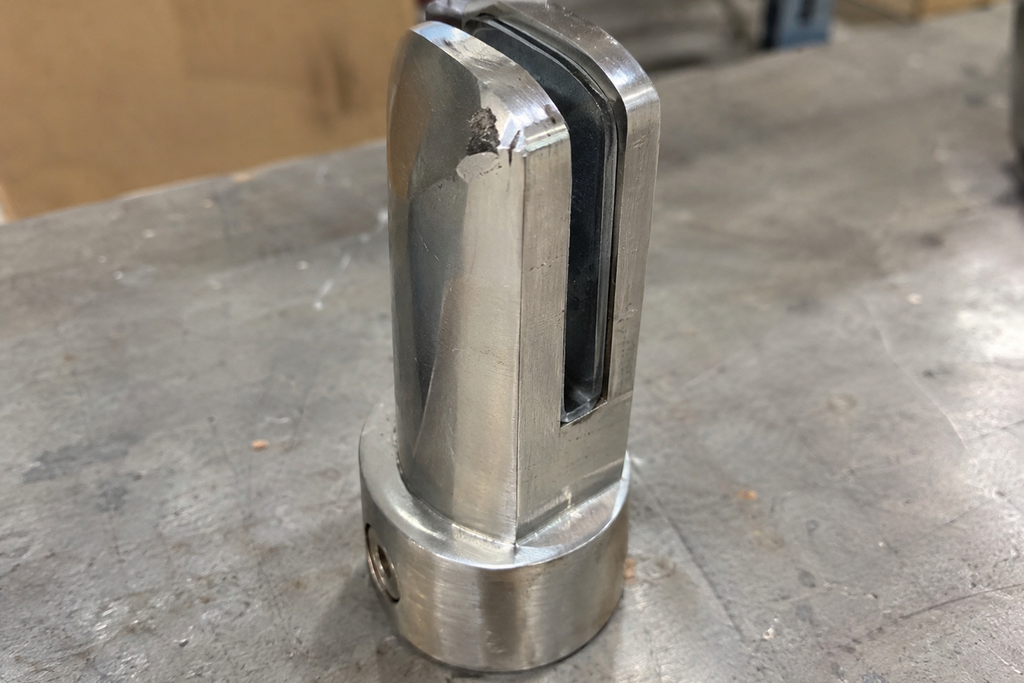
Steel spanners and over-tightened fixings chip coatings. Dragged base plates scratch them. Wet concrete, render or grout left on the hardware stains it, and the worst offender is the landscaper who arrives the following week with acid to clean the pavers. Harsh chemicals can dull a coating and mark stainless just as easily. Then there’s grinding. Sparks and dust from cutting carbon steel can embed in stainless and leave little rust freckles that look like the spigot is failing when it isn’t.
The fixes are boring, which is why they work. Use the right tools and follow the manufacturer’s torque and packing guidance. Wrap or mask the hardware while other trades are around. Wash off residue the same day. Keep some touch-up product in the ute, and wipe stainless down before you hand over. If you’re not the last trade on site, agree the sequencing with the builder and get it in writing.
Check it at the door, not at the slab
The photo above is a good example of a habit worth building. Unpack and inspect hardware when it arrives, not when you’re standing over a core-drilled hole with the glass on the truck. It only takes a few minutes, and it’s the difference between a quick swap and a delayed job.
A short receiving routine covers most of it:
- Match the grade, finish and quantity against the order and the packing slip.
- Look over every unit for gouges, chips, scratches and loose or missing fittings.
- Check the gasket or packing material is present and in good condition.
- Photograph anything that looks off before you sign for it or remove packaging.
- Store hardware clean and dry, and keep black finishes wrapped until they’re needed.
Get the “black” right
Here’s one that catches people out. Black isn’t one colour. A matte black next to a satin black looks like a mistake, and a gloss finish beside powder-coated aluminium frames looks different again. If the client has black windows, gates or handrails, put a sample next to them in daylight before you order. It’s a small thing that saves an awkward conversation later.
The same goes for mixing metals. Plenty of clients want black spigots and a stainless handrail, or brushed stainless spigots with a black gate. That can look great, but it’s a deliberate choice, and it’s worth confirming with the client rather than discovering it at handover. In general, a consistent finish across spigots, gate hardware and any balustrades looks more settled than a mix that happened by accident.
What to put on the quote
You don’t need a legal document. A few plain lines do the job. Say which grade and finish you’re supplying, for example “316 stainless” or “black powder-coated over stainless,” as confirmed by your supplier. Note that routine rinsing is recommended in coastal or high-exposure locations, and that you’ll leave a care note at handover. And if other trades are still due on site, record that protecting the hardware and sequencing the work will be agreed before you start. If a problem turns up later, that page of paper is what everyone will reach for.
When the client wants black and the site says stainless
It happens all the time. The best approach we’ve heard is not to argue. Agree that black will look great with the frames, explain the one specific risk, and give them the choice. Something like: “Black will look great here. Being this close to the water, it’ll need regular rinsing and might need touching up over the years. Stainless is the lower-maintenance option. Which would you like?” Then write down what they chose. Most people appreciate being asked, and you’re covered either way.
The care note you leave at handover
Clients rarely know how to look after fence hardware, and the number of calls you get later depends a lot on what you tell them on the day. A short, plain note is enough. Here’s a version you can adapt:
- Rinse the hardware with fresh water regularly. Near the coast, do it more often, and after storms or windy weeks.
- Clean with mild detergent and a soft cloth or sponge. Rinse it off afterwards.
- Avoid abrasive pads, wire brushes and acidic or harsh cleaners, especially on black finishes.
- Keep pool chemicals, fertiliser and cement products off the hardware, and rinse them off straight away if they land there.
- If you notice a chip, scratch or stain, get in touch early. Small problems are easy to fix.
It also helps to say who to call and what the warranty covers. A note with your contact details on it will save you a lot of “who installed this?” guessing later.
Replacing or changing spigots on an existing fence
Sooner or later a client will ask whether they can swap their old stainless spigots for black, or replace a damaged one. The honest answer is “maybe.” It depends on the spigot’s size and fixing, the glass thickness, the base condition and the manufacturer’s specification. A different brand’s spigot might look identical and still not suit the existing glass or hole pattern. Check with your supplier before you promise anything, and don’t assume the existing installation is compliant just because it’s already there. If the fence is a pool barrier, any change should still meet the requirements for the location.
Thinking about cost the sensible way
The price difference between black and stainless spigots is often modest, but it depends on the brand, the coating, and the quantity, so we’d rather you quote from current supplier pricing than a rule of thumb. What’s worth weighing up is the cost of getting it wrong. A callback to a finished pool fence for staining or a chipped coating costs you a trip, some goodwill, and sometimes a reference. Choosing the right finish for the site, and writing it down, is usually the cheapest insurance in the job.
Compliance doesn’t care about colour
Finish makes no difference to the barrier requirements. Pool fences in Australia fall under AS 1926.1 and your state or territory rules, and the spigots need to suit the engineered design and the glass thickness. Always follow the manufacturer’s installation specification. If you work in NSW, it’s also worth knowing what a pool owner needs when they sell, so here’s our guide to pool compliance certificates in NSW.
Unsure about a particular job?
Give us a ring on (02) 9627 9500 (Monday to Friday, 7am to 3:30pm) and we’ll talk it through. You can also see our trade page or request a quote.
Frequently asked questions
1. Do black spigots rust?
A good finish over a corrosion-resistant base shouldn’t. Trouble usually starts where the coating is damaged and the metal underneath can’t cope, which is why the base material and careful handling matter.
2. Is 316 stainless always necessary?
No. It’s the safer choice near the coast and around chlorinated pools. Inland, the decision usually comes down to the look and what the client prefers, as long as the product suits the environment.
3. What’s the difference between 304 and 316 stainless?
316 contains molybdenum, which helps it resist chlorides such as salt and pool chemicals. 304 is often fine inland but is more prone to staining near the coast.
4. Which is easier to maintain, black or stainless?
Both need regular rinsing. Black can show dust, water spots and salt more readily, while satin or brushed stainless tends to hide minor marks well. Neither is maintenance-free.
5. Why do stainless spigots get brown stains?
Usually surface staining, sometimes called tea staining, caused by salt and moisture sitting on the surface, or by contamination from carbon steel. Cleaning and rinsing usually deals with it, and 316 is more resistant than 304.
6. Can I touch up a chipped black spigot?
Small chips can generally be touched up with the manufacturer’s recommended product. Do it early, before moisture gets under the coating. For larger damage, talk to your supplier about replacement.
7. Can I use harsh cleaners or acid on pavers around the fence?
Be careful. Acid and other harsh cleaners can dull coatings and mark stainless. Cover the hardware, or agree with the landscaper how the surrounds will be cleaned.
Related posts
- Black spigots vs stainless steel spigots for glass pool fencing
- Choosing the ideal spigot for a glass pool fence or balustrade
- Friction spigots vs standoff for glass barriers
- Balustrades for coastal homes
- Frameless vs semi-frameless pool fencing for Sydney homes
- Sequencing glass fencing into a new pool build
- Pool compliance certificates in NSW