
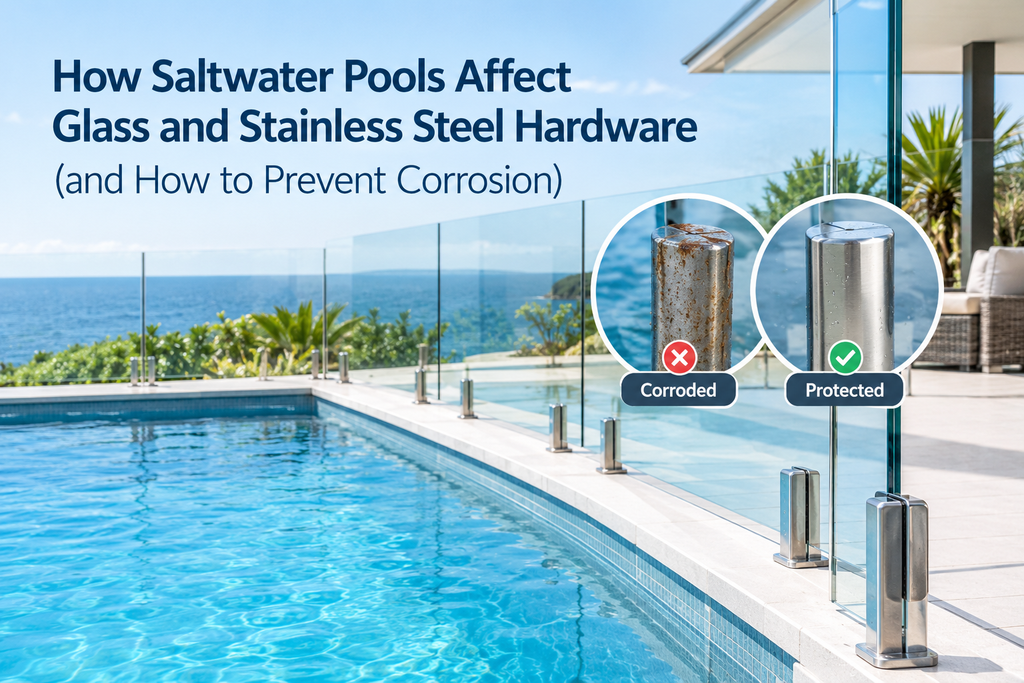
Saltwater pool fencing corrosion is a maintenance issue, not a reason to avoid glass fencing. A saltwater chlorinator produces chlorine, while splashes and wind can leave salt and mineral residue on glass panels, spigots, hinges and latches. If residue remains on hardware, it can contribute to tea staining or pitting – especially when the stainless steel grade is not suited to the site. With the right hardware specification and a simple rinsing routine, you can reduce the risk and keep your fence looking better for longer.
What does saltwater do to glass pool fencing?
A saltwater pool is not the same as a seawater pool, but the splash zone can create similar maintenance challenges. Droplets dry on glass and leave mineral spots. On stainless steel, salt and moisture can weaken the protective passive layer that helps the metal resist corrosion. Early signs may include brown tea staining around spigot bases, hinge barrels or latch tongues. If corrosion progresses to pitting, hardware may need replacement.
Glass itself does not rust. Cloudiness beside a saltwater pool is usually caused by dried minerals, calcium or sunscreen residue on the surface. Regular cleaning can often remove these marks before they build into stubborn scale. Cloudy glass alone does not necessarily mean the panel has failed.
Choose the right stainless steel grade
The appearance of a fitting does not tell you its stainless steel grade. A polished fitting and a black-coated fitting can use different base materials, so ask your supplier to confirm the grade in writing. This is particularly important for coastal properties, where sea air adds another source of salt exposure.
304 stainless steel is commonly used in sheltered or inland settings, but it is more likely to tea-stain in demanding poolside or coastal environments. 316 stainless steel offers better resistance to chloride exposure and is a sensible choice for many poolside and coastal applications. For highly exposed saltwater pool sites, 2205 duplex stainless steel may be considered where the product and site specification call for greater pitting resistance. Confirm suitability with the hardware supplier rather than choosing by grade name alone.
Finish is a separate decision. A black spigot may have a coating over a stainless steel body, but the coating does not automatically improve the corrosion resistance of the underlying metal. You can compare the practical differences between black and stainless steel spigots, then ask your supplier to confirm both the base grade and the finish.
How to prevent saltwater pool fencing corrosion
You cannot prevent every splash, but you can avoid leaving salt and chemical residue sitting on hardware for long periods.
1. Rinse with fresh water. After heavy pool use, rinse spigots, hinges, latches and the lower section of glass panels. Rinse after a salt addition or chlorinator-cell clean if residue has reached the fence.
2. Clean glass gently. Use a suitable neutral glass cleaner and a soft cloth, sponge or squeegee. Avoid abrasive pads on glass and coated fittings.
3. Keep pool chemistry balanced. Follow your pool technician’s advice for chlorine output and pH. Avoid allowing chemical splashes or concentrated products to contact the hardware.
4. Keep chemicals away from the fence. Store pool chemicals safely and avoid positioning discharge or spray where it can blow directly onto glass or metal fittings.
5. Inspect moving hardware. Check hinge pins, latch tongues and fixings at least seasonally. If the gate stops closing or latching reliably, arrange an inspection promptly.
Exposed coastal sites and fences that receive frequent spray may need more frequent rinsing than sheltered inland pools.
What should you avoid when cleaning glass and hardware?
Avoid steel wool, wire brushes, harsh acids and strong cleaners unless the product manufacturer specifically confirms they are suitable. These can scratch glass, damage a black coating or mark stainless steel. Products intended to remove cement haze can be particularly aggressive. Start with fresh water and a suitable glass or stainless steel cleaner. If mineral scale has bonded to the surface, seek advice from a glazier or the product supplier before using stronger chemicals. For additional guidance on surface staining and maintenance, consult the Australian Stainless Steel Development Association’s guide to preventing coastal corrosion and tea staining.
When should you replace the hardware?
Cleaning may remove early surface staining, but it cannot reverse pitting or restore a damaged fitting. Arrange an assessment if you see pinholes, rough pitted areas, rust emerging from inside a hinge barrel, loose components or a gate that needs a push to latch. A corroded or unreliable pool gate is a safety concern, not just a cosmetic issue.
When replacing parts, match the new fitting to the existing system, glass thickness and manufacturer’s specification. A cover made from a higher grade does not upgrade a lower-grade body underneath. If you are ordering a new fence, specify the grade before the substrate is drilled and the hardware is installed.
A seasonal glass pool fence maintenance checklist
- Rinse spigots, hinges and latches with fresh water and remove residue from the glass.
- Look for tea staining around spigot bases and inside hinge knuckles.
- Check that the gate self-closes and self-latches as intended.
- Look for loose fittings, unusual movement or panels that appear to have shifted.
- Arrange replacement or professional assessment if pitting or unreliable gate operation is present.
- Complete a check before the main swimming season and repeat during summer if the pool is used heavily.
- Routine rinsing and early attention to staining can help reduce avoidable maintenance and replacement costs.
Need help choosing pool fence hardware?
Glass & Fencing Warehouse supplies glass pool fencing products and hardware from its Riverstone warehouse, including options for coastal and saltwater pool projects. The right specification depends on the site’s exposure, the product and the installation requirements, so confirm the grade with your supplier before ordering. Explore pool fencing in Sydney or call (02) 9627 9500 to discuss your project.
Conclusion
Saltwater pools can leave mineral marks on glass and accelerate staining or corrosion on stainless steel hardware that is not suited to the environment. Choose fittings based on the site’s salt exposure, confirm the grade rather than relying on colour or finish, and rinse the hardware regularly with fresh water. If you notice pitting or a gate that no longer closes and latches reliably, arrange an assessment instead of relying on cleaning alone. A suitable specification and consistent maintenance routine can help extend the service life of your glass pool fence hardware.
Frequently asked questions
Does a saltwater pool damage glass pool fencing?
Saltwater does not corrode glass like it can corrode metal. Splash can leave mineral spots or haze on the surface, while the stainless steel spigots, hinges and latches need suitable grades and regular cleaning.
Is 304 stainless steel suitable beside a saltwater pool?
It may be suitable in some sheltered environments, but it is more prone to tea staining in exposed poolside or coastal conditions. 316 is often a better choice for these settings, while 2205 duplex may be considered for more demanding exposure. Confirm the specification with your supplier.
How often should I rinse glass pool fence spigots?
Rinse after heavy pool use or whenever salt and splash residue is visible. Coastal or highly exposed fences may need more frequent rinsing than sheltered inland installations.
Can tea staining be removed from stainless steel?
Early surface staining can often be removed with a stainless steel cleaner suitable for the finish. Pitting is damage to the metal and cannot be polished away; badly pitted or unreliable hardware should be assessed for replacement.
Will a black coating prevent corrosion?
A coating can provide a surface barrier, but it does not change the grade of the metal underneath. Ask for the base material and coating specification, and inspect chips or scratches promptly.
What should I do if my pool gate no longer latches properly?
Arrange a prompt inspection and repair. A pool gate must continue to operate as required by the applicable pool barrier rules; do not treat unreliable latching as a cosmetic maintenance issue.