
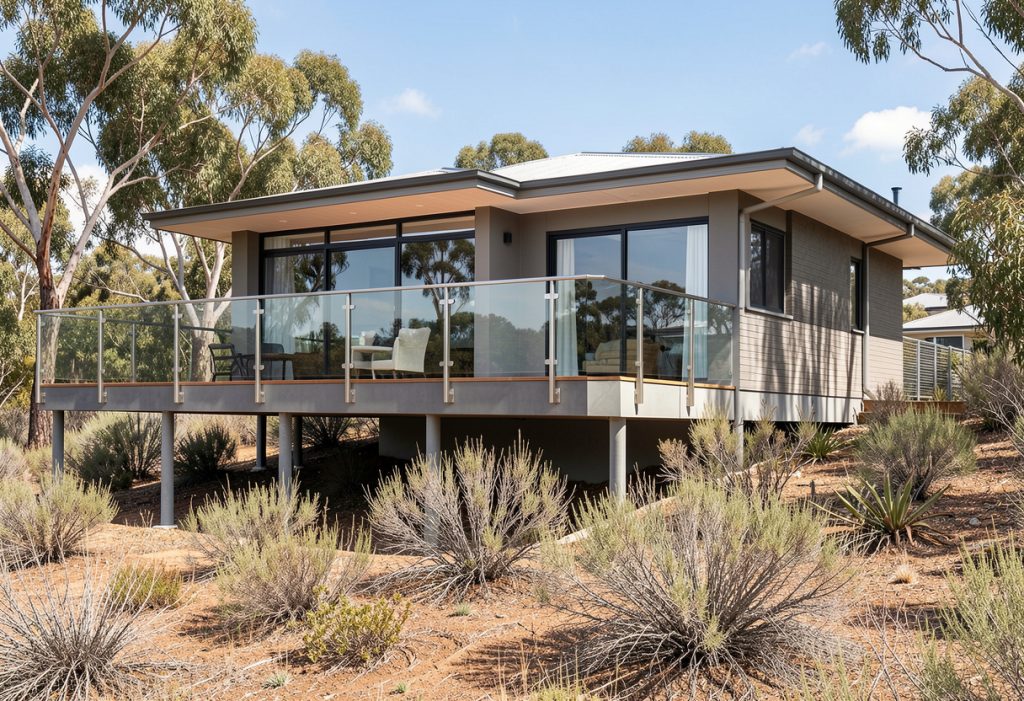
Building or renovating in bushfire-prone areas brings a level of scrutiny that many tradies and installers underestimate. Clients often want modern finishes, open views, and minimal visual obstruction, yet compliance requirements can quickly complicate those design choices. One of the most common questions that arises on site is whether glass balustrades in bushfire zones can meet fire safety expectations without introducing risk. This article breaks down the compliance realities, material considerations, and practical installation guidance so you can make informed decisions and avoid costly mistakes.
The Compliance Challenge in Bushfire-Prone Areas
Bushfire zones in Australia are regulated under the Bushfire Attack Level (BAL) framework, which assesses a site’s exposure to ember attack, radiant heat, and direct flame contact. For balustrades, decks, and elevated structures, non-compliant materials can act as ignition points or fail under extreme heat.
When incorrectly specified, balustrades can compromise overall fire safety compliance, even if the rest of the structure meets code. This is where uncertainty around glass balustrades in bushfire zones often arises, particularly for projects near bushland, coastal scrub, or semi-rural developments.
Why Balustrade Materials Matter More Than You Think
Balustrades are often installed on decks, balconies, and stairs, areas directly exposed to airborne embers. Fencing materials that warp, ignite, or crack under heat can allow fire to spread into the structure.
Traditional timber infill or low-grade plastics are high-risk in these environments. By contrast, toughened safety glass does not ignite, does not contribute fuel, and performs predictably when exposed to heat. However, not all glass systems are created equal, and compliance depends heavily on specification and installation.
Understanding how glass balustrades in bushfire zones are assessed under BAL requirements is essential before committing to a system.
BAL Ratings and Where Glass Fits In
BAL ratings range from BAL–LOW through to BAL–FZ (Flame Zone). Each level imposes stricter material and construction controls.
For balustrades:
- Toughened or laminated safety glass is generally acceptable across most BAL levels
- Framing and fixings must be non-combustible
- Gaps, seals, and interfaces must minimise ember entry
In higher-risk areas, BAL-rated glass systems are often preferred because glass itself is classified as a bushfire-resistant material. The risk usually lies not in the glass, but in the supporting components and detailing.
This distinction is critical when assessing glass balustrades in bushfire zones for compliance rather than relying on assumptions.
Common Mistakes That Lead to Non-Compliance
Even experienced installers can run into issues when bushfire requirements are not addressed early. Typical problems include:
- Using combustible timber posts or handrails
- Incorrect fixing methods that create ember traps
- Non-compliant spacing between glass panels
- Failing to match balustrade systems with the site’s BAL rating
These oversights can trigger council rejections, failed inspections, or costly rectification work. In bushfire-prone builds, every component contributes to the compliance outcome, including balustrades.
Correctly specified glass balustrades in bushfire zones help eliminate many of these risks when paired with suitable hardware.
Practical Installation Considerations for Tradies
From an installer’s perspective, glass balustrades offer practical advantages in bushfire areas. They reduce ongoing maintenance, avoid surface degradation, and simplify compliance documentation when the right system is used.
Key considerations include:
- Selecting tested BAL-rated glass where required
- Using stainless steel or aluminium fixings
- Ensuring tight tolerances and sealed interfaces
- Following manufacturer’s installation guidelines precisely
When these steps are followed, glass balustrades in bushfire zones become a reliable, low-risk option rather than a compliance concern.
Benefits Beyond Compliance
While fire safety compliance is the priority, correctly installed glass balustrades deliver additional benefits:
- Uninterrupted views without compromising safety
- Long-term durability in harsh Australian conditions
- Lower maintenance compared to timber alternatives
- Easier alignment with modern architectural designs
For clients building in bushfire-prone locations, these advantages often make glass the preferred solution once compliance concerns are addressed.
Making the Right Specification Decision
The suitability of glass balustrades in bushfire zones ultimately comes down to system selection, not just material choice. Specifiers, builders, and installers should always cross-check:
- The site’s BAL rating
- Local council requirements
- Product compliance documentation
- Installation details that affect ember resistance
Early coordination between designer, supplier, and installer reduces risk and avoids late-stage changes that impact timelines and budgets.
Compliance First, Confidence Always
So, are glass balustrades suitable for bushfire zones? When properly specified, installed, and matched to BAL requirements, the answer is yes. Glass itself is a bushfire-resistant material, but compliance depends on the complete system and the attention to detail on site.By understanding the realities of glass balustrades in bushfire zones, tradies and decision-makers can deliver safer outcomes, meet regulatory obligations, and provide clients with confidence in their build. If you’re unsure whether a specific balustrade system suits a bushfire-prone project, seeking expert guidance early is the smartest way to stay compliant and protect both your work and your reputation. Get a free quick quote by Glass Fencing for the compliance check!