
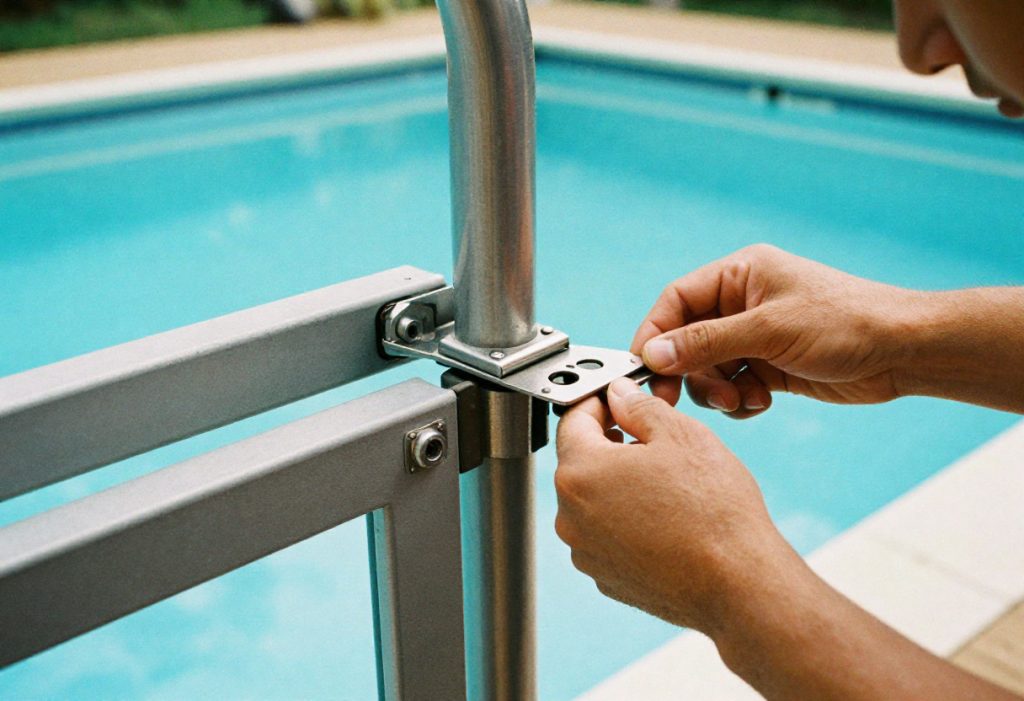
Pool fencing regulations in NSW place strong emphasis on gates. Even the best-designed fence becomes unsafe if the gate fails to close, lock, or latch properly. This is why choosing the right pool gate latches and hinges plays such a critical role in creating compliant pool gates. These components may be small, but they directly affect how well the fence protects children, pets, and anyone using the pool area.
Each year, compliance inspectors report that many non-compliant pools fail due to gate issues rather than the fence itself. Weak springs, loose hinges, worn latches, or gates dragging on the ground are common problems. With the right knowledge and high-quality pool gate latches and hinges, homeowners can prevent these issues and maintain a safe outdoor space.
Why does the pool gate matter most?
A pool gate is the only moving part of the entire fence, making it the most vulnerable component. It is opened and closed frequently, exposed to weather, and often used by children or guests. As a result, NSW regulations require all pool gates to be self-closing and self-latching.
Pool gate latches and hinges work together to achieve this. The hinges ensure the gate closes automatically, while the latch secures it the moment it shuts. If either component fails, the safety of the entire pool fence is compromised.
How do pool safety hinges work?
Pool safety hinges are designed to pull the gate back to the closed position without manual assistance. They use internal tension to close the gate smoothly and with enough force for the latch to engage correctly.
Quality hinges should:
- Close the gate fully from any open position
- Operate smoothly without sticking or dragging
- Allow tension adjustment for seasonal changes
- Resist corrosion in outdoor and pool environments
When hinges lose tension, gates can remain slightly open, making even well-installed pool gate latches and hinges ineffective.
What makes a reliable pool gate latch?
The latch is the final locking mechanism. Once the gate closes, the latch must engage instantly and remain secure until intentionally opened.
A compliant latch should:
- Lock automatically without manual force
- Be positioned out of reach of children
- Sit at least 1.5 metres above ground level
- Remain functional in wet and sunny conditions
Magnetic, spring-loaded options are commonly used with pool gate latches and hinges because they offer consistent locking and minimal jamming.
Common problems that affect compliance
Many homeowners are unaware of hardware issues until a compliance inspection fails. The most common problems affecting pool gate latches and hinges include:
- Gate dragging on the ground, preventing proper latching
- Loose hinge fixings reducing self-closing strength
- Corroded hardware in coastal or high-moisture areas
- Misaligned latch and striker plates
- Sticky or slow-moving hinges due to debris or wear
Regular checks help maintain safe, child-resistant gate hardware and prevent unexpected repairs.
How to keep your pool gate compliant all year?
Maintaining compliant pool gates requires simple, routine testing. Open the gate fully and allow it to close naturally. If it fails to shut or latch, the pool gate latches and hinges likely need adjustment or replacement.
Homeowners should also check:
- That the latch clicks firmly every time
- Screws and fixings remain tight
- No visible rust or damage is present
- Garden beds or furniture do not create climbable access
A monthly inspection goes a long way in preserving safety and compliance.
Why does professional installation matter?
Even high-quality pool gate latches and hinges can fail if installed incorrectly. Proper alignment, correct hinge tension, and accurate latch positioning are essential for long-term performance.
Glass & Fencing Warehouse installs compliant pool gate hardware across Sydney and understands how different surfaces and environments affect gate operation. Professional installation ensures smooth performance through seasonal changes and ongoing compliance with NSW pool safety standards.
Final thoughts
Pool gates are only as safe as the hardware supporting them. Choosing durable pool gate latches and hinges, combined with regular maintenance, helps protect children and ensures your pool fence remains compliant. When installed and maintained correctly, these components create a reliable safety barrier every time the gate closes.If you are planning an upgrade or need expert advice, you can request a quote from Glass & Fencing Warehouse for tailored recommendations and compliant hardware solutions.