
A pool fence inspection can feel daunting, especially if you are unsure what inspectors are actually checking. In New South Wales, pool safety laws are detailed and strictly enforced, with the goal of preventing unsupervised access to pool areas. Even small oversights can result in a failed inspection, delays, or unexpected rectification work.
Knowing what inspectors focus on during a NSW pool fence inspection makes preparation far easier. It also helps homeowners understand why certain rules exist and how to keep their pool area safe long term.
This guide breaks down the most common pool fence inspection points and explains what typically affects approval.
How Pool Fence Inspections Work In NSW?
A pool fence inspection is designed to confirm that your pool barrier meets current pool fencing regulations in NSW. These rules apply to private homes, rental properties, and shared spaces, with some variations depending on the age of the pool and its access method.
Inspectors follow a structured compliance process for pool fence inspections that examines the entire barrier, not just the fence panels. Gates, surrounding objects, doors, and ongoing maintenance all form part of the assessment.
Suppliers and installers with strong local experience, such as Glass & Fencing Warehouse, understand how these pool fence inspections are carried out and how materials and layouts affect compliance outcomes.
Fence Height And Structural Stability
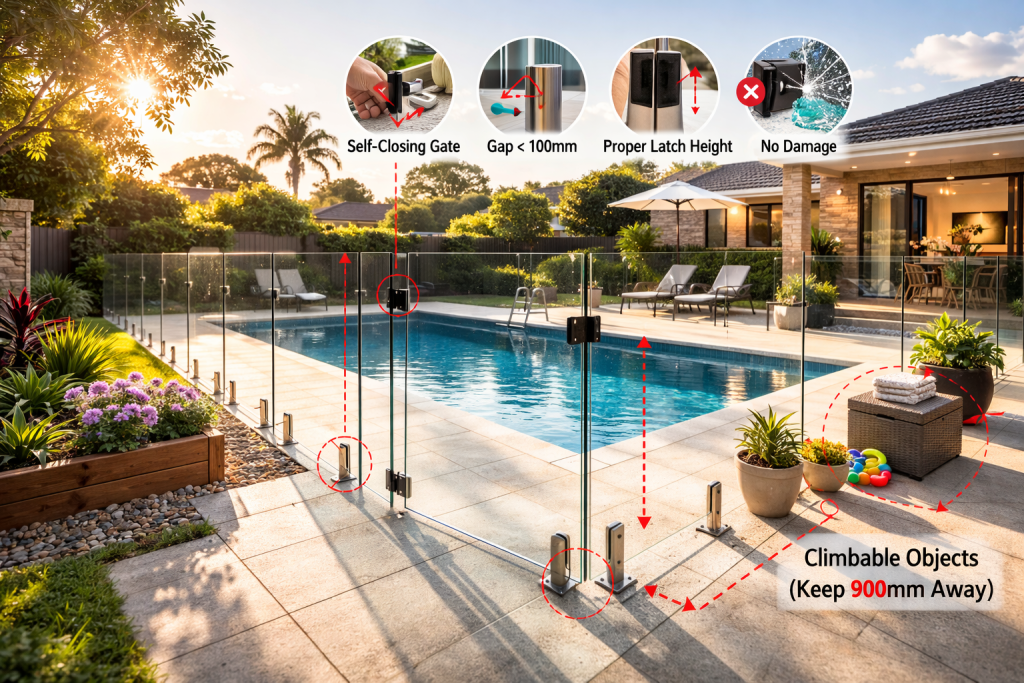
One of the first things inspectors assess is the overall height and strength of the pool fence. In most cases, the minimum required height is 1.2 metres, measured from the finished ground level.
Inspectors typically check:
- The fence fully encloses the pool area
- That there are no gaps underneath exceeding 100mm
- That the panels are straight and securely fixed
- Those posts, spigots, or frames do not move under pressure
Any signs of leaning, loose fittings, or movement can raise concerns about safety and durability.
Gate Function And Self-Closing Performance
Gates receive close attention during every pool fence inspection. A large number of failed pool fence inspections are caused by gate-related issues rather than the fence itself.
Inspectors will test:
- Whether the gate swings outward, away from the pool
- If the gate closes fully on its own
- Whether the latch engages automatically every time
- The height and positioning of the latch
The gate must close and latch from any open position without assistance. If it sticks, slows down, or fails to latch consistently, it will not pass.
This is why quality hinges and latches are critical, and why experienced suppliers like Glass & Fencing Warehouse place strong emphasis on compliant gate hardware.
Panel Spacing And Climb Prevention
Another key part of the pool fence inspection checklist is spacing. Inspectors check that children cannot pass through or climb over the barrier.
They look for:
- Gaps between vertical bars or glass panels no wider than 100mm
- Horizontal rails or decorative features that could act as footholds
- Changes in ground level that reduce effective fence height
Even design elements that appear harmless can lead to non-compliance if they create a climbing opportunity.
Clear Space Around The Pool Fence
Inspectors also assess the area around the fence. Objects placed too close can make it easier to climb over, even if the fence itself is compliant.
Common issues include:
- Outdoor furniture positioned near the fence
- Pot plants placed against panels
- Retaining walls or boundary fences too close
- Storage boxes, BBQs, or pool equipment nearby
In most cases, climbable objects must be kept at least 900mm away from the pool fence.
Doors And Windows Forming Part Of The Barrier
If the house forms part of the pool barrier, inspectors will closely examine doors and windows that open into the pool area. This is especially important for older homes that may not have been designed with current rules in mind.
Inspectors may check:
- Self-closing and self-latching door mechanisms
- Window opening sizes and sill heights
- Child-resistant locks or security screens
The construction date of the pool often determines which rules apply, so inspectors usually confirm when the pool was built.
General Condition And Ongoing Maintenance
Even a fence that was compliant at installation can fail if it has not been maintained. Inspectors look for signs that the barrier is still safe and functional.
They may flag:
- Rusted or loose fittings
- Cracked or chipped glass
- Stiff hinges or faulty latches
- Sharp edges or exposed fixings
Regular checks help prevent small issues from becoming compliance failures.
Certificates And Inspection Outcomes
After a successful pool fence inspection, a certificate of compliance may be issued. This document is often required when selling or leasing a property, making inspections important not just for safety, but also for legal and financial reasons.
Many homeowners choose to upgrade or replace fencing components before a pool fence inspection to reduce the risk of failure. Working with a supplier like Glass & Fencing Warehouse helps ensure materials align with NSW requirements from the outset.
Final Thoughts
A pool fence inspection is about ensuring the barrier genuinely protects against unsupervised access, particularly by children. Inspectors look beyond appearances and focus on function, spacing, and reliability. By understanding what is included in a pool fence inspection checklist and how pool fencing regulations in NSW are applied, homeowners can prepare with confidence. Checking gates, nearby objects, spacing, and overall condition before pool fence inspection can save time, money, and unnecessary stress while keeping the pool Request a quote to schedule a pool fence inspection.