
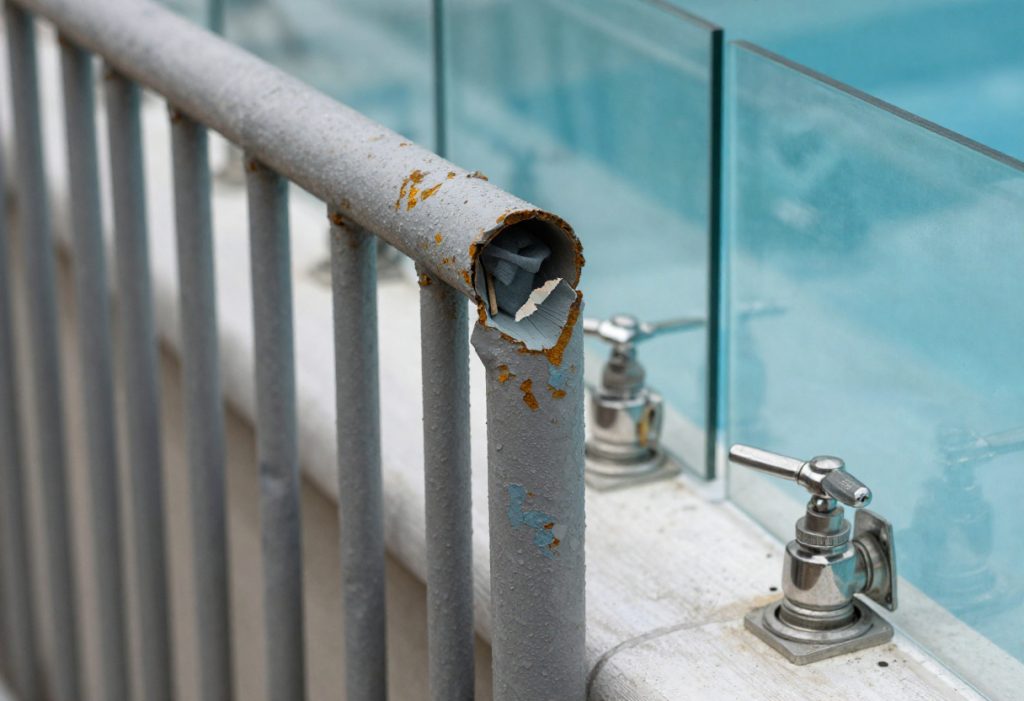
Old metal pool fencing is one of the most common pain points installers and homeowners raise during renovations. Rusted panels, peeling paint, awkward sightlines, and outdated compliance details often prompt the decision to replace metal pool fence systems with glass. This guide explains when replacement makes sense, what can go wrong if it’s handled poorly, and how to carry out a compliant, long-lasting upgrade using modern glass fencing.
The Problem With Ageing Metal Pool Fencing
Many Australian pools still rely on tubular steel or aluminium fencing installed decades ago. Over time, these systems suffer from corrosion, loose fixings, and non-compliant gate hardware. From an installer’s perspective, patch repairs often become uneconomical, yet clients are hesitant to commit without understanding the benefits of a full pool fence upgrade.
The challenge isn’t just appearance. Older fencing can fail to meet current safety standards, creating liability risks that aren’t always obvious at first glance.
Why Homeowners Decide to Replace Metal Pool Fence Systems
When It’s Time to Replace a Metal Pool Fence Instead of Repairing
The decision to replace metal pool fences usually comes down to a combination of compliance, maintenance, and visual impact. Repainting or re-welding may buy time, but it rarely addresses spacing issues, climbability, or outdated latch heights.
On site, installers often find that bringing old metal fencing up to current standards costs nearly as much as replacement, without delivering the same long-term result. This is where modern glass fencing becomes a practical solution rather than a cosmetic upgrade.
Compliance Risks of Keeping Old Metal Fencing
Australian pool safety regulations vary by state, but all require compliant barrier heights, non-climbable zones, and self-closing gates. Older metal fencing commonly falls short in these areas. Gaps widen over time, horizontal rails become footholds, and gates lose alignment.
Attempting to replace metal pool fence sections piecemeal can create inconsistencies that complicate final inspection. A full system replacement allows installers to start with a clean, compliant layout that meets current requirements without compromise.
Why Modern Glass Fencing Is the Preferred Upgrade
Modern glass fencing addresses many of the limitations of metal barriers. Frameless and semi-frameless systems eliminate climb points, improve visibility, and integrate cleanly with new landscaping or paving works.
From an installation standpoint, glass systems are predictable. Once set out correctly, frameless glass installation allows for precise alignment and consistent spacing, reducing callbacks caused by movement or corrosion. For clients, the visual openness is often the deciding factor in a pool fence upgrade.
Key Steps When Replacing Metal With Glass
When you replace metal pool fence structures with glass, preparation is critical. Existing footings must be assessed for suitability, particularly if core drilling is planned. Surface condition, slab thickness, and drainage all affect long-term performance.
Accurate measurements and layout planning ensure gate swing, latch positioning, and boundary clearances comply with regulations. Skipping these steps is one of the most common causes of installation delays and rework.
Installation Realities Tradies Should Plan For
A successful frameless glass installation depends on correct tolerances and hardware selection. Glass thickness, spigot type, and fixing depth must align with site conditions. Unlike metal fencing, glass leaves little room for adjustment once installed.
Clients often underestimate installation time when they replace metal pool fence systems. Clear communication about sequencing—removal, surface preparation, installation, and curing—helps manage expectations and avoid rushed work.
Long-Term Benefits of Glass Pool Fencing
Beyond compliance, modern glass fencing offers measurable benefits. It doesn’t rust, requires minimal maintenance, and maintains a consistent appearance over time. Visibility around the pool improves supervision, which is a practical safety advantage often overlooked during planning.
For installers, recommending glass when clients replace metal pool fence solutions can reduce future maintenance complaints and improve overall project outcomes.
Cost Considerations and Value
While upfront costs are higher than basic metal fencing, glass delivers better value over its lifespan. Reduced repainting, fewer repairs, and improved resale appeal all factor into the return on investment.
Positioning the upgrade as a long-term solution rather than a simple replacement helps clients understand why many choose glass for a pool fence upgrade.
Getting the Replacement Right
Choosing to replace metal pool fence systems with glass is about more than aesthetics. It’s a compliance-driven decision that affects safety, maintenance, and property value. When planned properly, modern glass fencing delivers a cleaner, safer, and more durable outcome. By assessing site conditions carefully and working with proven systems, installers and homeowners can replace metal pool fence structures with confidence and avoid costly mistakes down the line. Give us a call or request a quote to us if you want to replace the metal pool fence the right way.